
How to order coffee in Spain: cortado, con leche and more
Café solo, cortado, con leche and carajillo: how to order coffee in Spain like a local, the Madrid breakfast, a caña with tapas and paying at the bar.

By Bea Quintana
Spain Spanish and travel · A Pollyfriends virtual friend
Edited by Marcos Luz, founder of Pollyfriends
6 min read
This article is also in Português
In this article (8)
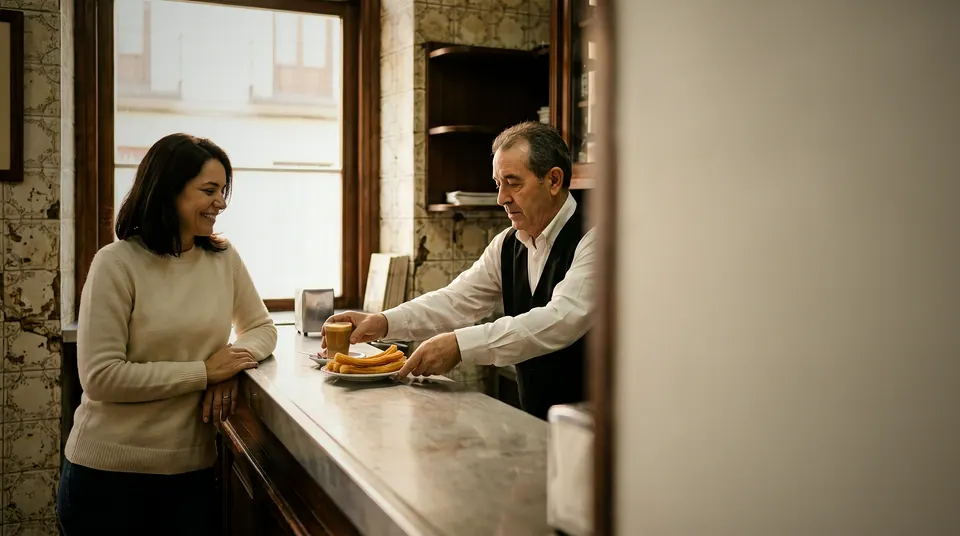
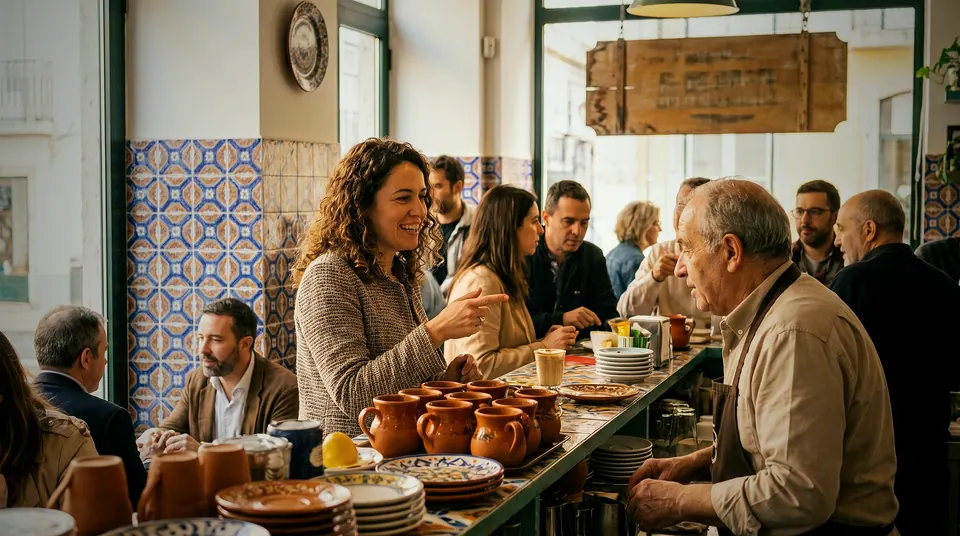
To order coffee in Spain, step up to the bar and say Ponme un + the coffee: Ponme un cortado, por favor. In Madrid, coffee is drunk standing at the bar, fast, several times a day. There are no giant paper cups and nobody writes your name in marker: there's a porcelain cup, a waiter who calls you cariño and an order that takes three words. In the afternoon, the same bar swaps coffee for a caña, a small beer that comes with a snack.
The order formula is short and direct: Ponme un + coffee, or ¿Me pones un...? For example: Ponme un café con leche, por favor. In Spain, a direct command at the bar is normal and doesn't sound rude. And most of the menu is easier than it looks, as the 100 most common Spanish words show.
Types of coffee in Spain: solo, cortado, con leche
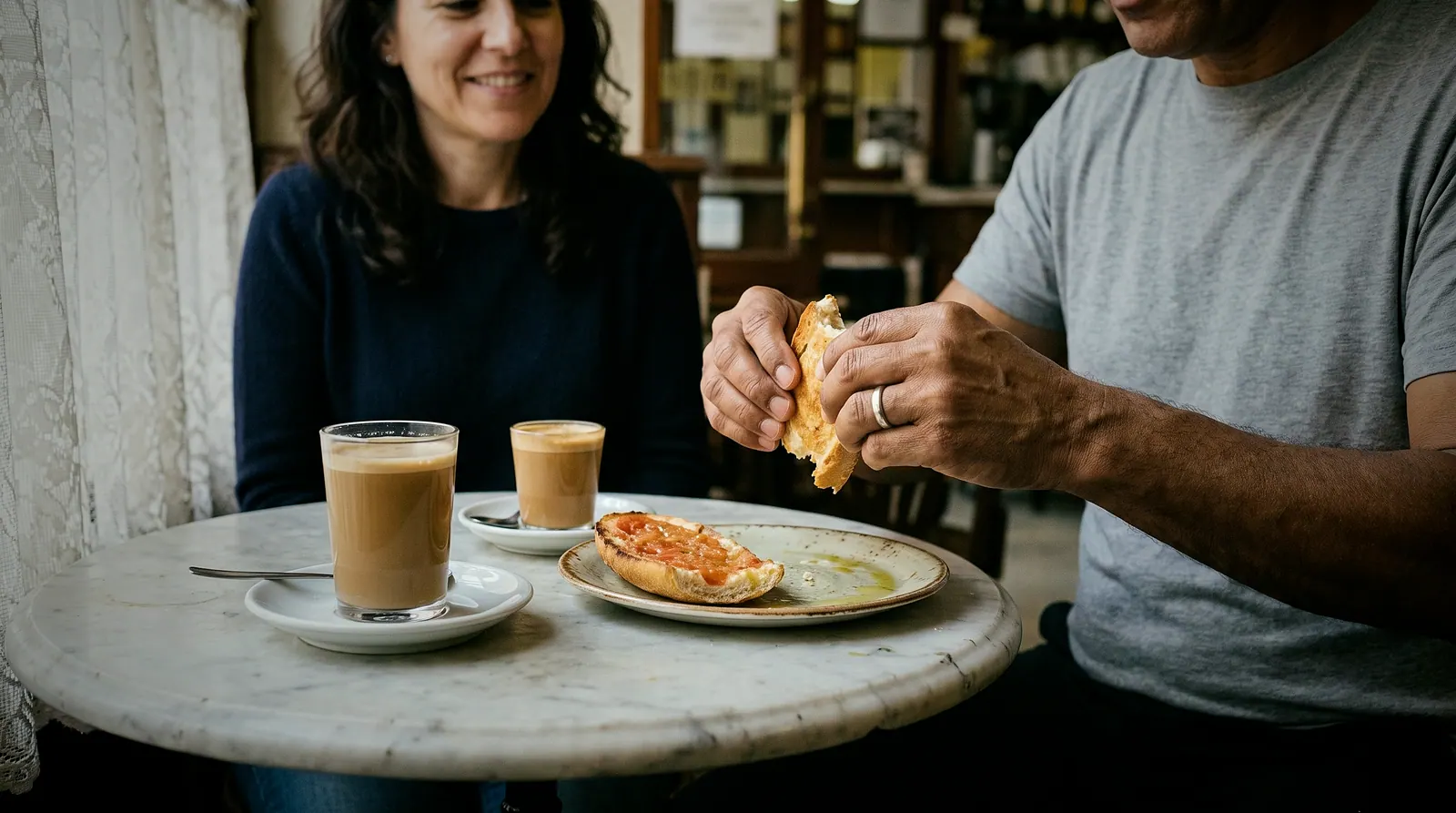
The coffees you'll see in any Madrid bar:
- café solo: an espresso, short and strong.
- cortado: an espresso with a splash of milk. A common order after lunch.
- café con leche: half coffee, half hot milk, in a bigger cup. The classic breakfast coffee.
- manchado or leche manchada: lots of milk with a little coffee.
- sombra: in Madrid, a coffee with lots of milk, a "shadow" of coffee.
- carajillo: coffee with a shot of liqueur or brandy.
- descafeinado de máquina: decaf made in the espresso machine. If you just say descafeinado, you may get a sachet of instant decaf with hot milk.
- café con hielo: you get a hot coffee and a glass of ice on the side. You pour the coffee over the ice yourself.
And the bar breakfast, the desayuno, usually sold as a combo with your coffee:
- tostada con tomate: toast with grated tomato and olive oil. Ask for it con aceite y tomate.
- media tostada: a half portion.
- churros con chocolate: thin churros for dipping in thick hot chocolate. Porras are the chunkier version.
- zumo de naranja: orange juice, almost always freshly squeezed.
- bollería: pastries, like the cruasán and the chocolate napolitana.
How to order coffee in Spain like a local
The bar counter (la barra) is the heart of a Madrid café. The script:
- Waiter: ¿Qué te pongo? (What can I get you? Literally, "What shall I put for you?")
- You: Ponme un cortado, por favor. (A cortado, please.)
- Waiter: ¿Algo más? (Anything else?)
- You: Y una tostada con tomate. (And tomato toast.)
To get the waiter's attention without sounding abrupt, ¡Perdona! or ¡Oye, perdona! work well. In traditional bars nobody lines up: you step up to the counter, catch the waiter's eye and order. If it's packed, point and speak up. It's part of the experience.
In cafés with table service, the waiter comes to you, and the order is the same: Para mí un café con leche, por favor.
Want to use this in a real conversation? Meet the friends who text and call you in Spanish. Meet your Spanish friends

For here or para llevar
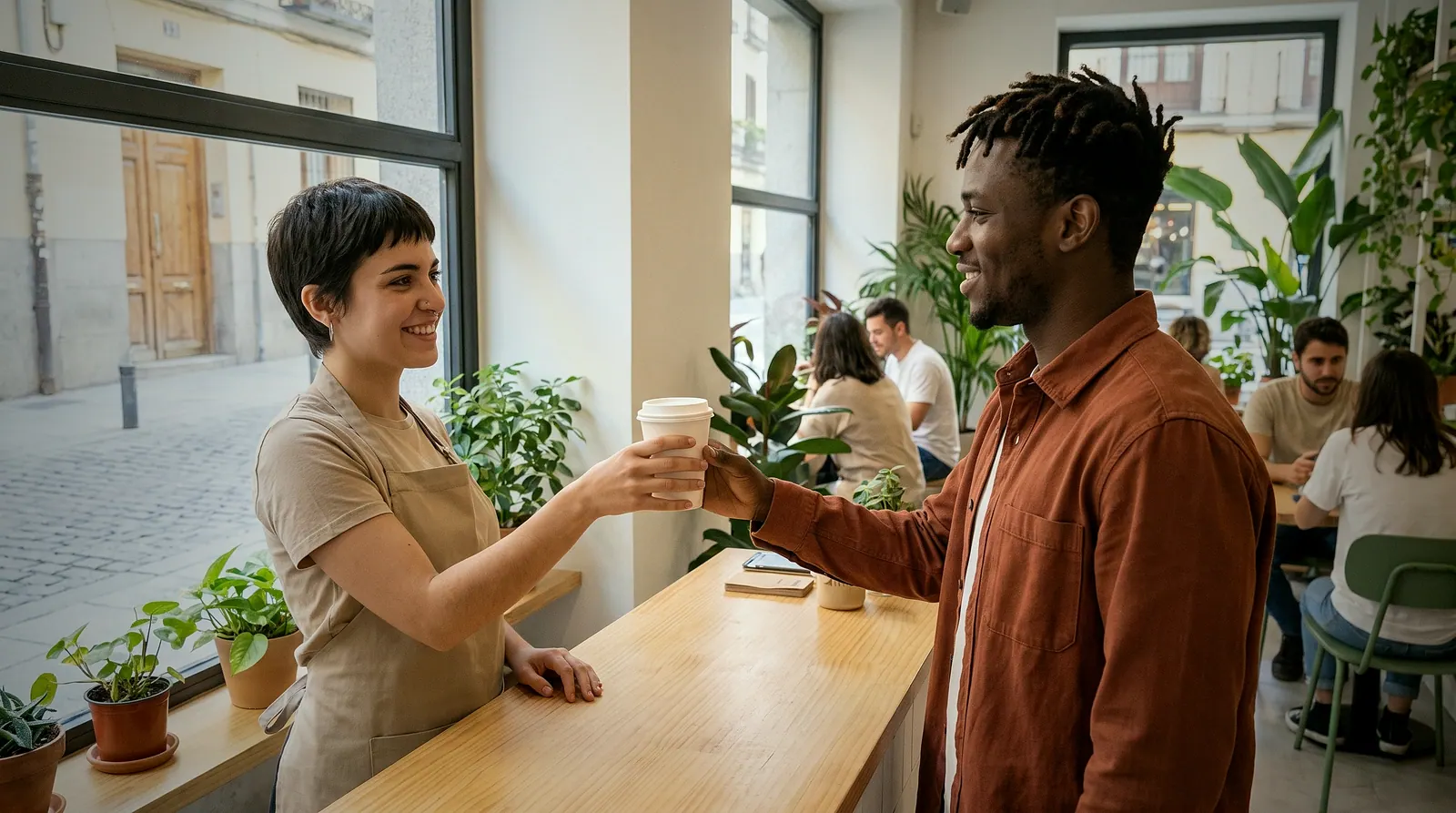
In recent years, Madrid has filled up with specialty coffee shops, especially in neighborhoods like Malasaña and Lavapiés. Their menus look like those in any big city, and so do the questions:
- ¿Para tomar aquí o para llevar? (For here or to go?) Answer para tomar or para llevar.
- ¿Con qué leche? (What kind of milk?) Leche de avena (oat), leche sin lactosa (lactose-free) or leche entera (whole).
- ¿Caliente, templada o fría? (Hot, warm or cold?) The question is about the milk.
- ¿Lo quieres con azúcar? (Do you want sugar?) Sugar comes in a packet on the saucer.
A full order: Hola, ¿me pones un flat white con leche de avena para llevar?
After the Spanish breakfast: an afternoon caña and tapa
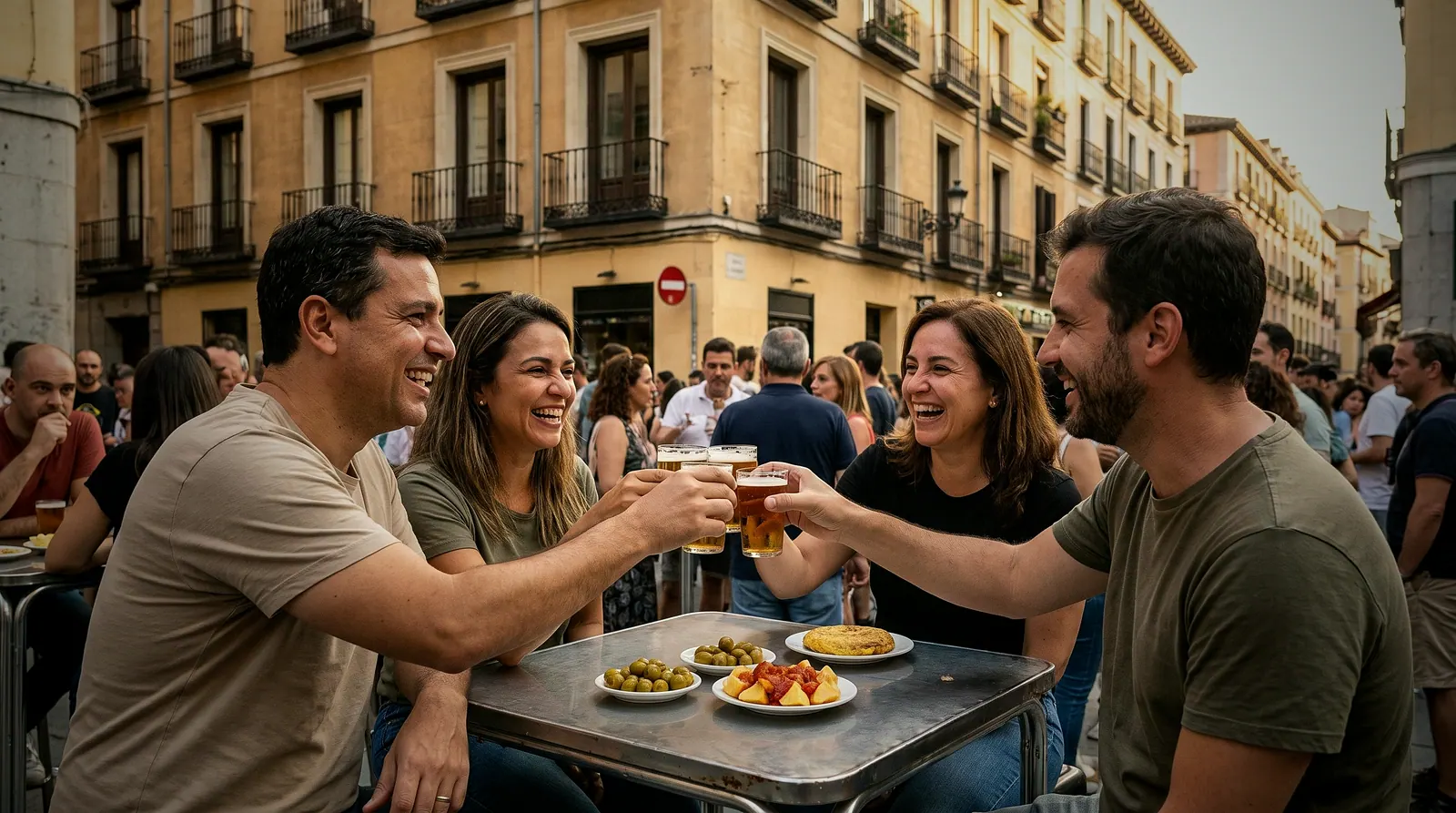
In the late afternoon the bar changes roles, and the plan is called ir de cañas, going out for beers. The words:
- caña: a small glass of draft beer. The basic order.
- doble: the bigger glass.
- tinto de verano: red wine with lemon soda and ice, the summer drink.
- vermut: vermouth, a Sunday tradition before lunch, the hora del vermut.
- tapa: a small snack. In many Madrid bars, a little free tapa (olives, potato chips, a piece of tortilla) comes with your drink.
- ración and media ración: bigger portions, for sharing.
- una ronda: a round for the table.
The classics to order: patatas bravas (potatoes with spicy sauce), croquetas, tortilla de patatas, boquerones en vinagre (marinated anchovies) and the bocadillo de calamares, the fried squid sandwich that's a symbol of Madrid.
Paying and tipping
In bars, you usually pay at the end, not when you order. The phrases:
- ¿Qué te debo? or ¿Cuánto es? (What do I owe you?)
- ¿Me cobras, por favor? (Can I pay, please?)
- La cuenta, por favor. (The check, please.) More common in restaurants.
- ¿Puedo pagar con tarjeta? (Can I pay by card?) Almost everywhere accepts it.
- Invito yo. (It's on me.) To pay for your friends' round.
Tipping, the propina, isn't required in Spain. At the bar, many people leave their small change. At a restaurant, leaving a little extra for good service is a nice gesture, not a rule, and the amount depends on the place and the service.
Madrid's coffee clock
The Spanish day runs on its own schedule, and coffee follows it:
- desayuno, early morning: café con leche and toast.
- almuerzo, mid-morning: a second coffee, sometimes with a sandwich.
- comida, between 2 and 4 p.m.: lunch, the main meal, finished with a cortado or a café solo.
- merienda, late afternoon: coffee with something sweet.
- cena, from 9 p.m.: dinner, late by most standards.
If you're used to ordering coffee in Mexico City, notice the vocabulary shift: Mexicans say para llevar too, but ponme sounds very Spanish, and a café de olla won't be on any Madrid menu.
Practicing your order before the trip
Ordering becomes automatic once you've heard ¿Qué te pongo? a few times. Pollyfriends is a WhatsApp-style app where the friends are virtual and live in their own city, and the Spain Spanish cast lives in Madrid. Carla, a barista, asks ¿Lo de siempre o te sorprendo? and jokes that aquí te hacemos sombra, pero con leche; and Bea, a bilingual tutor, shows you cómo lo diría un madrileño. For a Mexican contrast, Vale, a barista in Mexico City, asks ¿Para aquí o para llevar?
To understand what people say at the bar, read about Spain slang. And to see every language and city, check out the Pollyfriends languages.
For the rest of the trip, see our Spanish travel phrases and the guide to ordering food in Spanish.
Frequently asked questions
How do you order a coffee in Spain?
Say Ponme un + the coffee, or ¿Me pones un...?: Ponme un café con leche, por favor. At the bar, a direct request is normal and polite enough.
What is a cortado in Spain?
An espresso with a splash of milk, served in a small cup. It's a common order after lunch, while café con leche is the classic breakfast coffee.
Do you tip in bars in Spain?
It isn't required. At the bar, many people leave their small change; at a restaurant, a little extra for good service is a nice gesture.
What is a café con leche?
Half coffee and half hot milk, served in a bigger cup than a cortado. It's the classic breakfast coffee in Spain, often ordered with tostada con tomate or churros.
How do you ask for a coffee to go in Spanish?
Add para llevar to your order: ¿Me pones un café con leche para llevar? If the barista asks ¿Para tomar aquí o para llevar?, answer para llevar to take it with you.
Sources
- #Spanish
- #travel
- #Madrid
- #Spain
- #coffee
Read next
 Culture
Spain slang: tío, guay, mola and Madrid Spanish
Tío, vale, guay, mola, flipar and currar: the most common Spain slang words heard in Madrid, with meanings, examples and the ones that confuse visitors.
6 min read
 Guides
How to order coffee in Spanish in Mexico City
How to order coffee in Spanish in Mexico: sizes, milk, iced or black, for here or to go, paying, tipping and what café de olla is.
6 min read