
Spain slang: tío, guay, mola and Madrid Spanish
Tío, vale, guay, mola, flipar and currar: the most common Spain slang words heard in Madrid, with meanings, examples and the ones that confuse visitors.

By Bea Quintana
Spain Spanish and travel · A Pollyfriends virtual friend
Edited by Marcos Luz, founder of Pollyfriends
6 min read
This article is also in Português

In this article (9)
- Spain slang words and meanings: tío, tía and friends
- Spain slang for cool: mola, guay and chulo
- Flipar, alucinar and reactions
- At home with Madrid friends
- Neighborhood Madrid: castizo and gato
- A text exchange between friends
- Spain Spanish vs. Latin American Spanish: the words that confuse visitors
- Hearing Madrid Spanish in conversation
- Frequently asked questions
The most common Spain slang words are tío and tía (dude, mate), vale (okay), guay (cool), mola (it's cool), flipar (to be blown away), quedar (to meet up) and currar (to work).
In Madrid, you'll hear vale all day long. You'll be called tío by people who aren't related to you, and you'll learn that something cool mola. Spain Spanish has its own vocabulary, different from Mexican and Argentine Spanish, and Madrid is where it sounds strongest.
Spain slang words and meanings: tío, tía and friends
Among friends, nobody uses first names all the time:
- tío and tía: dude, mate, girl. Tío, ¿qué dices? (Dude, what are you talking about?) It has nothing to do with being an uncle or aunt.
- chaval and chavala: kid, young guy, young woman.
- colega: buddy, pal. ¿Qué pasa, colega?
- macho: dude, between guys and even with women, in a tone of surprise.
- majo and maja: nice, friendly. Tu amiga es muy maja.
- guiri: a foreign tourist, especially from northern Europe. Said with humor.
And the casual greeting: ¿Qué pasa? or ¿Qué tal? (What's up?, how's it going?). The answer: Bien, ¿y tú?
Spain slang for cool: mola, guay and chulo

To say something is good, people in Madrid have plenty of options:
- guay: cool. ¡Qué guay! (How cool!)
- mola: it's cool, from the verb molar. Esa chaqueta mola (That jacket is awesome). Me mola means "I'm into it".
- chulo: nice, stylish. ¡Qué chulo! But careful: a chulo person can be cocky, full of themselves.
- una pasada: amazing, incredible. El concierto fue una pasada.
- brutal: amazing, in a good way.
- ser la leche: to be the best (or the last straw, depending on the tone).
- ser la pera: to be the best, again. Fruit sellers love the pun.
The Rastro, the street market that takes over the La Latina neighborhood every Sunday morning, is a great place to hear them all.
Want to use this in a real conversation? Meet the friends who text and call you in Spanish. Meet your Spanish friends

Flipar, alucinar and reactions
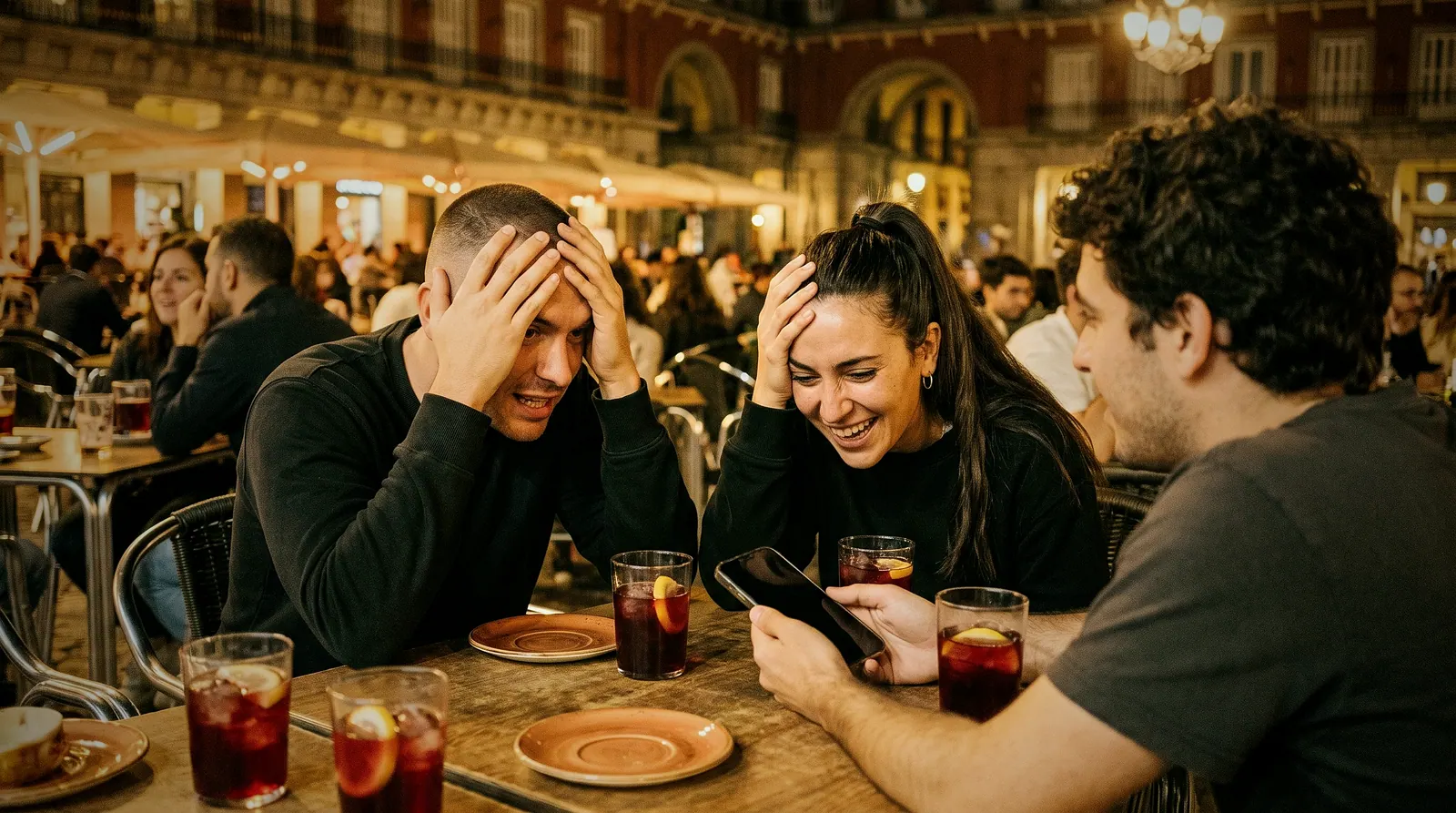
Spain Spanish is expressive, and reactions come out loud:
- flipar: to be stunned, to freak out. ¡Flipo! (I can't believe it!) Vas a flipar (You're going to love it).
- alucinar: the same. Alucino contigo (I can't believe you).
- ¡Qué fuerte!: that's crazy!, no way!
- ¡Hala!: wow!
- ¡Venga!: come on!, let's go!, or "okay, bye" at the end of a conversation.
- ¡Ostras!: gosh! The polite version of a much stronger word.
- me parto: I'm dying of laughter.
- ¡Qué morro!: what nerve!
- ¡Qué rollo!: how boring!, what a drag!
- vaya tela: what a situation, unbelievable.
At home with Madrid friends
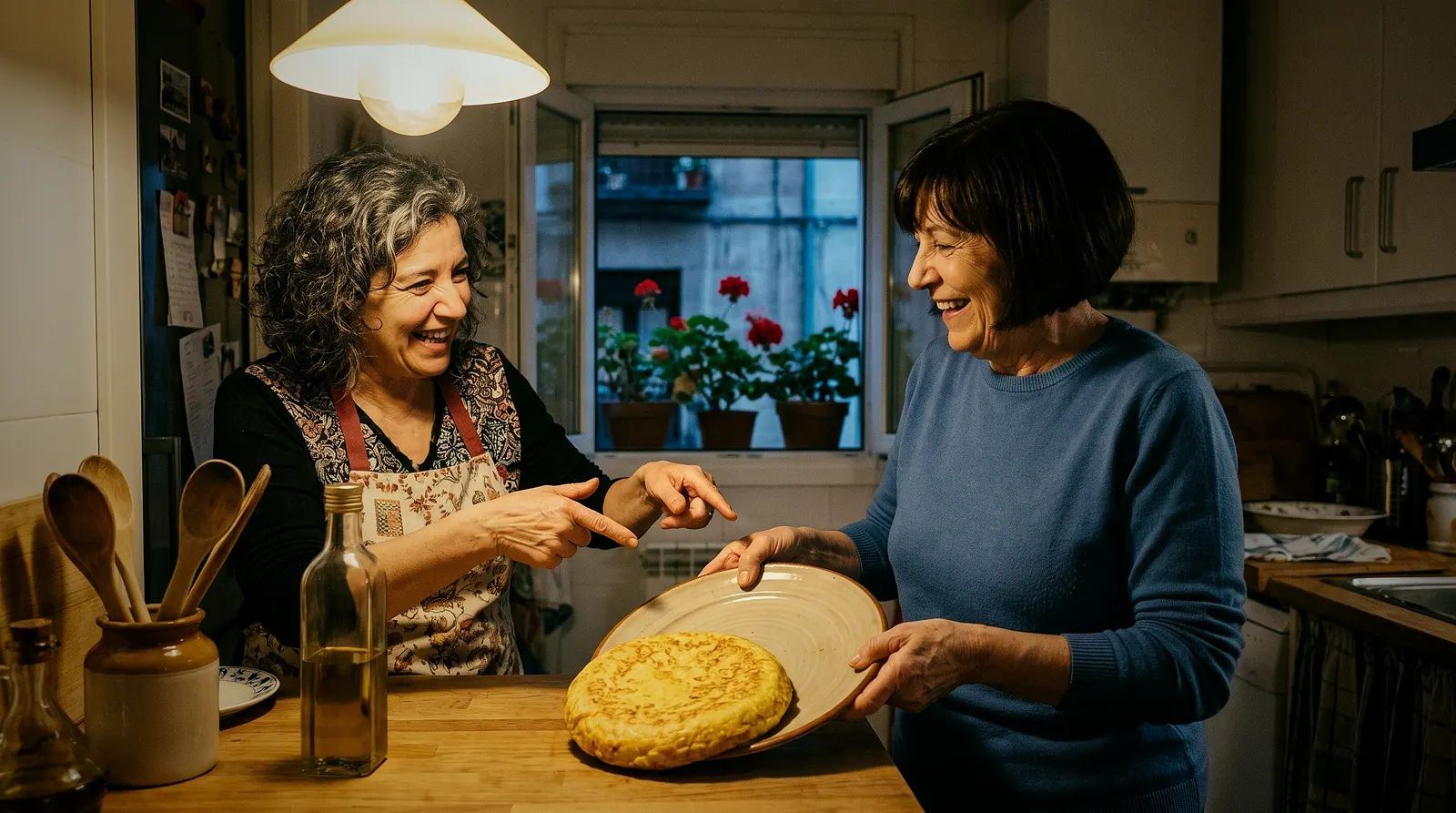
The vocabulary of people who live, work and go out in Madrid:
- quedar: to arrange to meet. ¿Quedamos el viernes? (Shall we meet on Friday?)
- piso: an apartment. Your compi de piso is your roommate.
- currar and curro: to work, work. Mañana curro temprano.
- pasta: money. Eso cuesta una pasta (That costs a fortune).
- pillar: to catch, to get it. ¿Lo pillas? (Get it?)
- mogollón: a ton, loads. Había mogollón de gente.
- estar hecho polvo: to be wiped out.
- ir de cañas: to go out for beers.
- de tranquis: chill, low-key.
And a debate that splits entire families: tortilla de patatas with or without onion. Pick a side with conviction. Nobody respects a fence-sitter.
Neighborhood Madrid: castizo and gato
Madrid has its own local pride, and some words belong to it alone:
- castizo: authentic, traditionally Madrilenian. A castizo bar has tiles, hanging ham and a waiter in a vest.
- chulapo and chulapa: Madrilenians dressed in traditional outfits for the San Isidro festivities in May.
- gato: a Madrid native, child and grandchild of Madrilenians. Soy gato is a point of pride.
- los Madriles: an affectionate nickname for the city.
A text exchange between friends
By message, people in Madrid abbreviate and mix all of this. A typical thread:
- Tía, ¿quedamos esta tarde? (Girl, shall we meet this afternoon?)
- Vale, pero salgo tarde del curro. ¿A las ocho? (Okay, but I get off work late. Eight?)
- Guay. ¿Vamos de cañas por La Latina? (Cool. Beers in La Latina?)
- Me mola. Llevo a mi compi de piso, que es muy maja. (Sounds good. I'll bring my roommate, she's really nice.)
- Venga, hasta luego. (Great, see you later.)
In writing you'll also see q (que), xq (porque), tb (también) and jajaja for laughter.
Spain Spanish vs. Latin American Spanish: the words that confuse visitors
The grammar is the same, but Spain uses vosotros, pronounces z and soft c with the tongue between the teeth, and has its own everyday words. A few mean something different elsewhere, or surprise people who learned Latin American Spanish:
- vale means okay. It's everywhere, all day.
- coger is just "to take" or "to grab" in Spain (coger el metro). In Argentina and Mexico, it's vulgar.
- ordenador is a computer (computadora in Latin America).
- móvil is a cell phone (celular in Latin America).
- zumo is juice (jugo in Latin America).
- conducir is to drive (manejar in much of Latin America).
- vosotros is "you all", used every day in Spain and almost never in Latin America.
- guapo means good-looking, and it even works for things: un piso muy guapo.
For comparison, see Argentine slang, where vos replaces tú and coger is off-limits too.
Hearing Madrid Spanish in conversation
Slang is learned by listening to people who use it. Pollyfriends is a WhatsApp-style app where the friends are virtual and live in their own city, and the Spain Spanish cast lives in Madrid. Paco, at the fruit shop, greets you with ¿Qué te pongo, cariño? and swears la pera es la pera; Encarna, at the neighborhood haberdashery, comforts you with eso tiene arreglo, mi alma; and Bea, a bilingual tutor, shows you cómo lo diría un madrileño.
Before you head to a bar, read how to order coffee in Spain, and compare with Mexican slang. To see every language and city, check out the Pollyfriends languages.
Frequently asked questions
What does tío mean in Spain?
Among friends, it means "dude" or "mate", and tía is used for a woman. It has nothing to do with being an uncle: Tío, ¿qué dices? is "Dude, what are you talking about?".
What is Spain slang for cool?
Guay, mola (from molar), chulo and una pasada. ¡Qué guay! is "How cool!" and Esa chaqueta mola is "That jacket is awesome".
What does vale mean in Spanish?
"Okay", "sure", "deal". In Spain it shows up in almost every conversation, as a reply, a question (¿vale?) and a way to close a plan.
What does guay mean in Spanish?
"Cool" or "great". ¡Qué guay! is "How cool!", and you can use it for a plan, a place or a person. Mola and chulo are close in meaning.
What does flipar mean in Spain?
To be stunned or blown away, in a good or a bad way. ¡Flipo! is "I can't believe it!" and Vas a flipar is "You're going to love it". Alucinar works the same way.
Sources
- #Spanish
- #slang
- #Spain
- #Madrid
- #Spain Spanish
Read next
 Guides
How to order coffee in Spain: cortado, con leche and more
Café solo, cortado, con leche and carajillo: how to order coffee in Spain like a local, the Madrid breakfast, a caña with tapas and paying at the bar.
6 min read
 Culture
Argentine slang: che, boludo, re and Buenos Aires Spanish
Che, boludo, re, laburo, quilombo and dale: the most common Argentine slang in Buenos Aires, with meanings, examples and the words that trip up visitors.
6 min read