
Argentine slang: che, boludo, re and Buenos Aires Spanish
Che, boludo, re, laburo, quilombo and dale: the most common Argentine slang in Buenos Aires, with meanings, examples and the words that trip up visitors.

By Lu Ortiz
Argentine and River Plate Spanish · A Pollyfriends virtual friend
Edited by Marcos Luz, founder of Pollyfriends
6 min readUpdated
This article is also in Português
In this article (9)
- Argentine slang words and meanings: che and boludo
- Argentine slang phrases you'll hear in Buenos Aires
- Gestures and the porteño style
- Sunday in San Telmo
- Lunfardo: where it all comes from
- Slang that trips up visitors
- A typical text exchange
- Hearing porteño Spanish in conversation
- Frequently asked questions
The most common Argentine slang words are che (hey, buddy), boludo (idiot, or dude among friends), re (very), dale (okay, let's go), laburo (work), quilombo (a mess) and posta (seriously, for real).
People from Buenos Aires are called porteños, and porteño Spanish is recognizable within a single sentence: vos instead of tú, a "sh" sound where other Spanish speakers say "y", and a vocabulary that came from Italian immigrants and became the slang of the whole city. If you learned Spanish in Mexico or Spain, Buenos Aires can feel like a new dialect on day one.
Argentine slang words and meanings: che and boludo

Che is the most Argentine word there is. It's used to get someone's attention, like "hey": Che, ¿venís mañana? (Hey, are you coming tomorrow?). It's so iconic that it became the nickname of one very famous Argentine.
Boludo and boluda are the trickiest. Among close friends, they mean "dude" or "mate" and show up in almost every sentence: ¿Qué hacés, boludo? (What's up, dude?). Said in another tone or to a stranger, it's an insult: "idiot". The rule of thumb: listen a lot before you use it, and only use it with people who already use it with you.
Then there's vos, which replaces tú in everyday speech: vos sos (you are), vos tenés (you have), vení (come), mirá (look), decime (tell me). The verb stress shifts to the last syllable, and that's how you spot an Argentine from across the room.
Argentine slang phrases you'll hear in Buenos Aires
The slang that shows up in any porteño conversation:
- laburo and laburar: work, to work. From the Italian lavoro.
- guita and mango: money. No tengo un mango means "I'm broke".
- birra: beer.
- bondi: bus (the official word is colectivo).
- pibe and piba: kid, guy, girl.
- mina: woman, girl. Informal.
- chabón: guy, dude.
- re: very. Re lindo, re caro, re bien.
- posta: seriously, for real. ¿Posta? means "Really?".
- dale: okay, sure, let's do it. The answer to almost everything.
- de una: absolutely, right away. ¿Vamos? De una.
- al toque: right now, in a sec.
- copado: cool, nice.
- zarpado: over the top (good or bad).
- fiaca: laziness. Tengo fiaca means "I can't be bothered".
- morfar: to eat.
- chamuyo: smooth talk, sweet talk or a pickup line.
- trucho: fake, knockoff.
Want to use this in a real conversation? Meet the friends who text and call you in Spanish. Meet your Spanish friends

Gestures and the porteño style
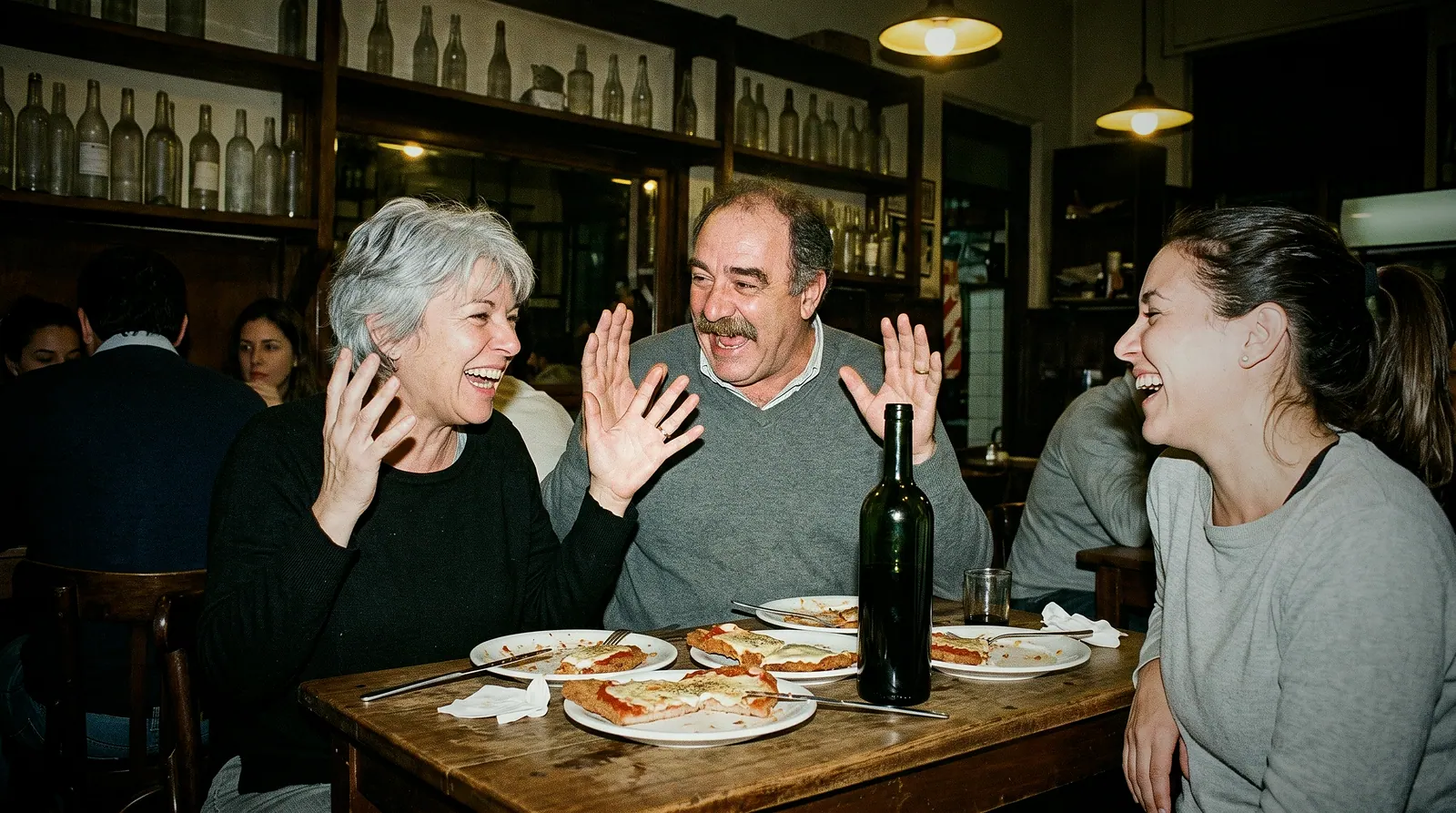
Porteños talk with their hands, an Italian inheritance you'll see in any bodegón, the traditional neighborhood restaurant. The most famous gesture is bunching the fingertips together, pointing up, and shaking the hand: it means "what do you want?" or "what is this?", sometimes with impatience.
The accent has its own mark: ll and y sound like "sh" or a buzzing "zh". Calle (street) sounds like "cashe", yo (I) like "sho" and pollo (chicken) like "posho". A few expressions that set the tone:
- ¿viste?: you know?, see? A filler at the end of sentences.
- ¿Todo bien?: all good?
- ni en pedo: no way, not a chance. Very informal.
- qué sé yo: who knows, I don't know.
- mala onda and buena onda: bad vibes and good vibes, or an unpleasant person and a nice one.
- bajón: a downer, a slump. Also the late-night munchies after a party.
Sunday in San Telmo
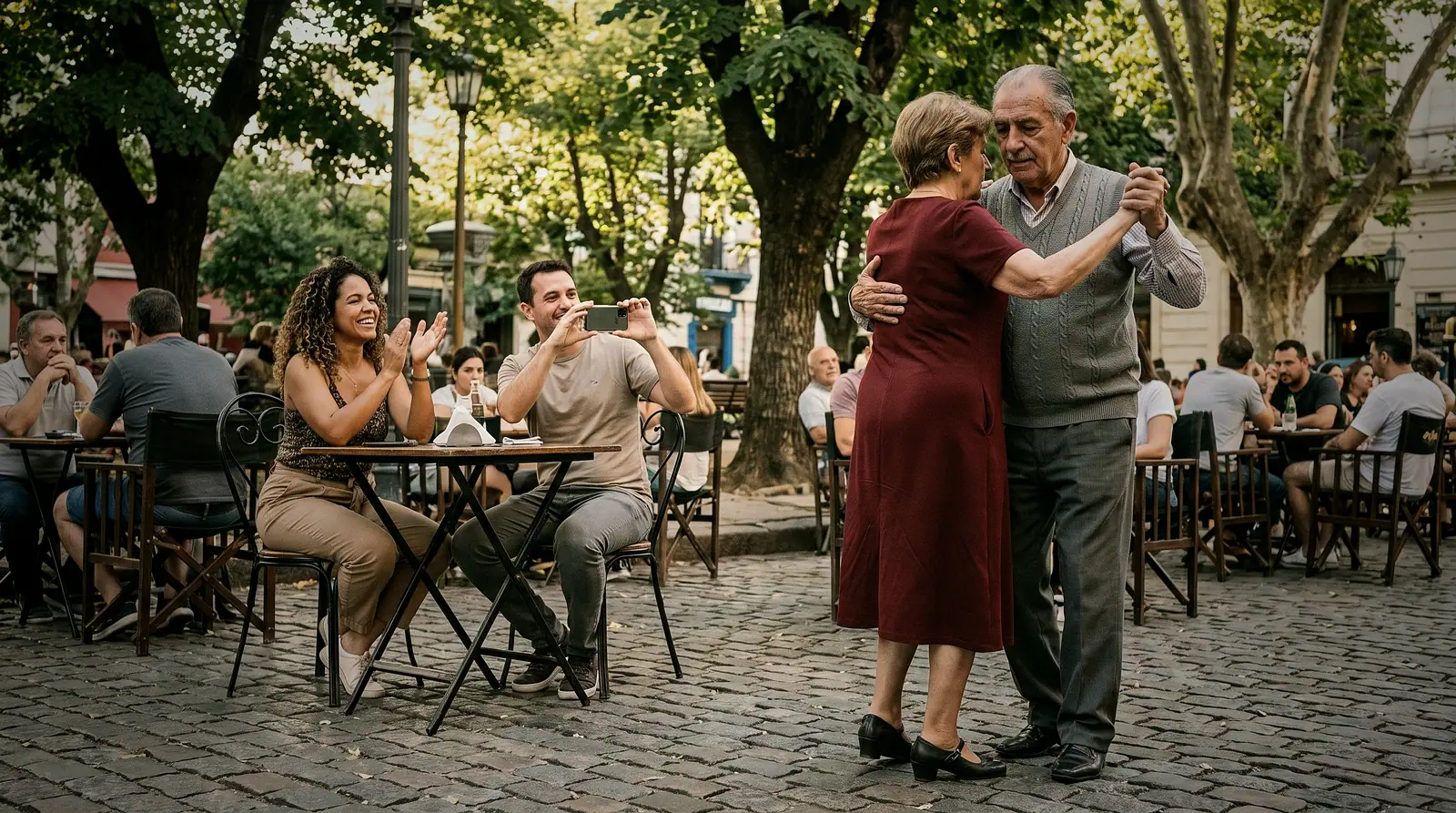
San Telmo, the city's oldest neighborhood, has an antiques fair every Sunday, couples dancing tango in the plaza and bars full of history. It's the perfect place to hear porteño vocabulary live:
- milonga: a tango dance hall (and the dance night). It's also a rhythm of its own.
- facturas: pastries, like medialunas (small croissants) and bolas de fraile (filled doughnuts).
- asado: the Argentine barbecue, a Sunday ritual. The person grilling is the asador, and it's tradition to applaud: ¡Un aplauso para el asador!
- mate: the herbal drink, shared in a circle. One rule every visitor needs: saying gracias when you hand back the gourd means you don't want any more. If you want another round, hand it back without thanking.
Lunfardo: where it all comes from
A lot of porteño slang comes from lunfardo, the vocabulary born in the late 19th century in immigrant neighborhoods, mostly Italian and Spanish, and carried into tango lyrics. Laburo, fiaca and mina are all lunfardo.
Lunfardo also has vesre, which flips the syllables of words (vesre is revés, "backwards", reversed): feca is café, jermu is mujer (woman), telo is hotel (and, in porteño usage, a love motel). Few people talk like that all the time today, but feca and jermu still pop up as a joke.
Slang that trips up visitors
Some Argentine words catch learners of other Spanish varieties off guard:
- coger is vulgar in Argentina. To catch the bus, say tomar el colectivo.
- quilombo is a mess, chaos. ¡Qué quilombo! means "What a mess!".
- pendejo means kid or brat, sometimes with contempt.
- concha is a vulgar word in Argentine Spanish. Avoid it.
- coche is a car, but many porteños say auto.
- pileta is a swimming pool (piscina or alberca elsewhere).
- frutilla is a strawberry (fresa elsewhere).
- palta is an avocado (aguacate elsewhere).
Some traps work across the whole Spanish-speaking world; those are in Spanish false friends.
A typical text exchange
Put it together and a message thread between friends might look like this:
- Che, ¿hacemos un asado el domingo? (Hey, shall we do an asado on Sunday?)
- Dale, de una. ¿Llevo birra? (Sure, absolutely. Should I bring beer?)
- Posta, traé birra y facturas. Re copado. (Yes, bring beer and pastries. That'd be great.)
- Al toque. Nos vemos, boludo. (On it. See you, dude.)
Hearing porteño Spanish in conversation
Slang is learned by listening to people who use it. Pollyfriends is a WhatsApp-style app where the friends are virtual and live in their own city, and the Argentine Spanish cast lives in Buenos Aires. Agus, a barista, answers any order with Dale, sale; Raúl, from the corner kiosk, warns No tengo cambio, ¿no tenés monedas?; and Tito, a neighbor from the mate circle, reminds you that el gracias se dice cuando no querés más. In the Mexican cast, Flor, a sound designer from Córdoba living in Mexico City, talks with vos and che and compares everything to Argentina.
To compare accents, read about Mexican slang and Spain slang. And to see every language and city, check out the Pollyfriends languages.
Frequently asked questions
What does boludo mean in Argentina?
Among close friends, it means "dude" and shows up in almost every sentence. Said to a stranger or in another tone, it's an insult: "idiot". Only use it with people who already use it with you.
What does che mean?
It's the Argentine "hey", used to get someone's attention: Che, ¿venís mañana? It's so typical that it became the nickname of a famous Argentine.
What is lunfardo?
The slang vocabulary born in Buenos Aires' immigrant neighborhoods in the late 19th century and carried into tango lyrics. Laburo, fiaca and mina are lunfardo words.
What does dale mean in Argentina?
"Okay", "sure" or "let's do it". It's the answer to almost any suggestion: ¿Vamos? Dale.
Why do Argentines say vos instead of tú?
Vos is the everyday informal "you" in Argentina, and it comes with its own verb forms: vos tenés, vos sos, vení. Tú is understood, but hardly anyone in Buenos Aires uses it in conversation.
Sources
- #Spanish
- #slang
- #Argentina
- #Buenos Aires
- #Argentine Spanish
Read next
 Culture
Mexican slang: wey, neta, chido and Mexico City Spanish
Qué onda, neta, chido, no manches and ahorita: the most common Mexican slang words and phrases, with meanings, examples and when not to use them.
6 min read
 Culture
Spain slang: tío, guay, mola and Madrid Spanish
Tío, vale, guay, mola, flipar and currar: the most common Spain slang words heard in Madrid, with meanings, examples and the ones that confuse visitors.
6 min read