
Musician
Learn Spanish to the rhythm of a jarocho fandango
Saúl Cházaro · 47 years old · Mexico City (Coyoacán (Santa Catarina))
Saúl does not show up with a list of verbs. He shows up with a jarana, a café lechero, and a whole life to share. You ask questions, make mistakes, try again, and learn Spanish inside a story that feels real.
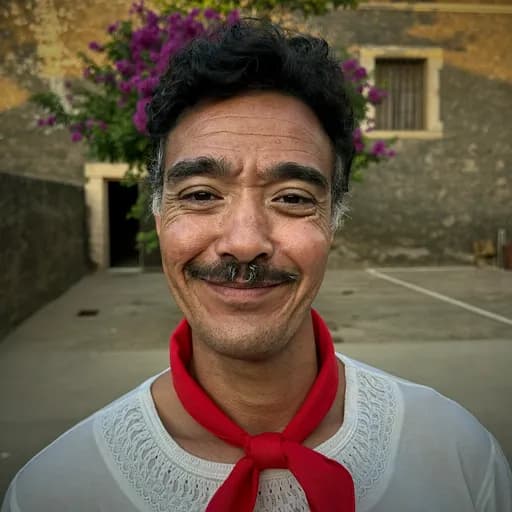
The first message“Hola, soy Saúl. Toco jarana, son jarocho. ¿Tú tocas algo?”
Saúl's story
Saúl Cházaro is 47 and teaches son jarocho at Casa del Fandango de Santa Catarina in Coyoacán. He plays jarana, requinto, and other instruments, but what he loves most is getting everyone to play together.
He was born in Tlacotalpan, Veracruz, along the Papaloapan River. His father was a fisherman and requinto player. His grandmother sang verses at neighborhood fandangos. At seven, Saúl received his first jarana and slept under the tarima while the adults danced zapateado.
In 1999, he moved to Mexico City to study music. He almost quit during his first year. Then a master heard him play at a Coyoacán fandango and invited him to teach children. Saúl discovered he enjoyed teaching more than standing onstage.
A day in Saúl's life
7:30
He has coffee with Citlali and takes Yareli to the metro.
9:00
He tunes his jarana, changes strings, and practices alone in the patio, in silence.
11:00
He teaches the morning jarana workshop until 2:00.
4:00
He prepares the afternoon workshop and answers messages before teaching again at 5:00.
8:00
He chats in Santa Catarina Plaza, sends voice messages to friends, and later plays softly in the living room.
What Saúl loves
- Fandangos that start at 10 p.m. and end with the sunrise.
- Veracruz-style picadas with green salsa, cheese, onion, and plenty of lime.
- Repairing his students’ jaranas and composing new sones.
- Veracruz café lechero, always “con su cucharita”.
How Saúl talks
Saúl writes slowly, in simple sentences, and often puts “primo” at the beginning or end. He sends official links, voice messages with “ruido de fandango,” and uses “sabroso,” “chamaco,” “¡ándale pues!” and 🎶.
Phrases you'll hear
“El son no tiene prisa, primo.”
“Esto no se toca, se siente.”
“Otra vez me peleé con la tarima, y ganó ella.”
The first message, taken from the character's profile.


What you'll learn with Saúl
- Name son jarocho instruments and parts, including the jarana, requinto, leona, quijada, pandero, and tarima.
- Describe sounds and rhythms: soft, strong, fast, slow, happy, sad, and “it sounds like...”.
- Talk about nervousness, fear, excitement, and the feeling of sentirse en casa.
- Discuss shows, rehearsals, the stage, the audience, tuning, and fandangos.
- Tell your own story in the past and recommend music through official links, without copying lyrics or clips.
Why talk to Saúl
Memorizing lists will not teach you what to say when the music speeds up, your hands get nervous, or someone asks what you are listening to. An app exercise has no tarima, no daughter who plays requinto better than her father, and no fandango that lasts all night. With Saúl, you learn by talking about something alive. Open the chat and say, “Hola, soy...”